
At National Roofing Contractors, we support commercial clients across Newcastle, Durham, Sunderland and the wider North East with roofing systems that deliver long term performance and reduced maintenance. One solution that continues to grow in popularity is liquid applied waterproofing. Businesses choose this system because it provides exceptional durability, strong resistance to weathering and a seamless protective finish that performs well on buildings of all sizes. With over 30 years of experience, we understand how commercial roofs behave and why liquid systems now outperform many traditional methods.
This long form guide explains why liquid applied waterproofing has become a preferred choice for commercial buildings, which benefits matter most to facilities managers and how this solution integrates naturally with our wider commercial services. These services include commercial roofing, commercial roof repair, commercial fibreglass roofing, commercial roof cladding, commercial wall cladding and new commercial flat roofing.
What makes liquid applied waterproofing suitable for commercial roofs?
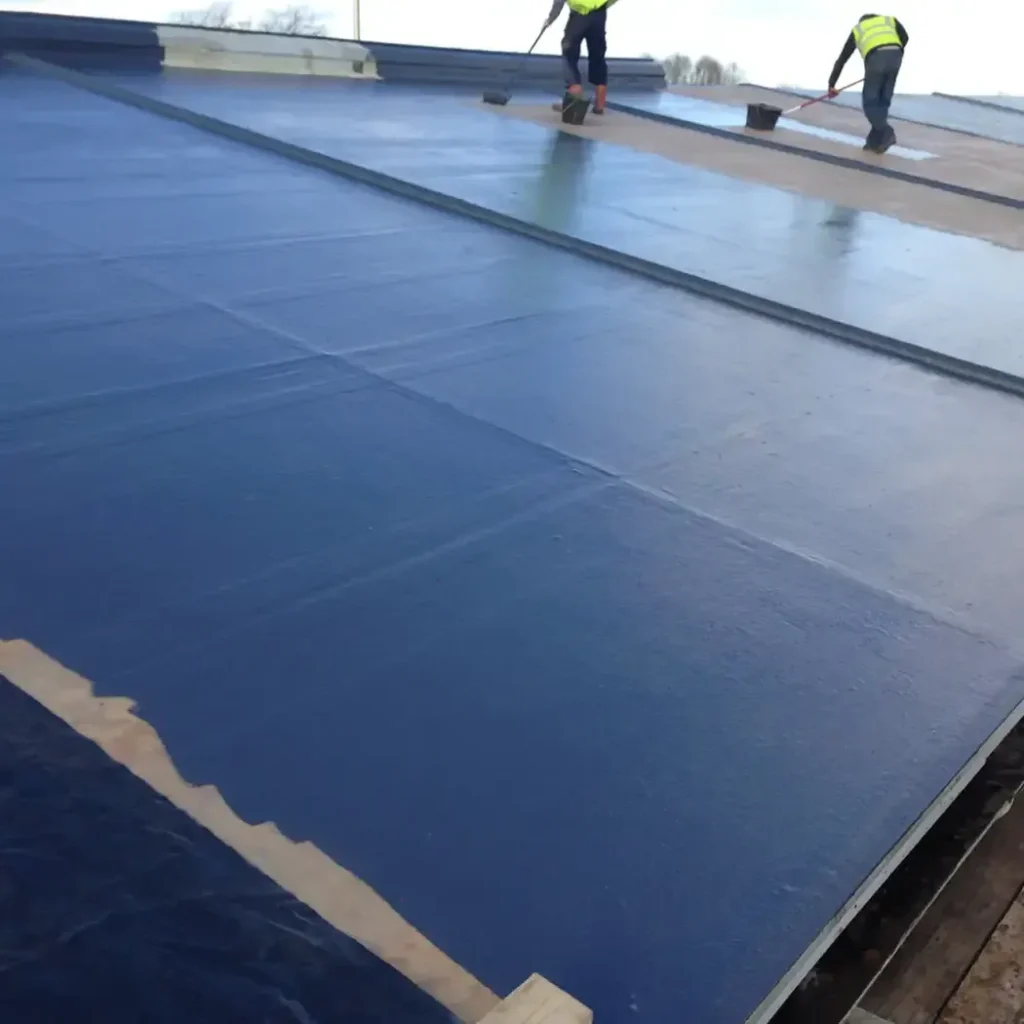
Liquid applied systems offer unique advantages because they adapt to roof shapes, materials and existing conditions. When applied correctly, the liquid cures into a single waterproof membrane. This creates a unified shell that protects the entire roof surface without any joints or seams.
Does liquid applied waterproofing work with a wide range of roof structures?
Yes, one of the biggest advantages is its versatility. Commercial buildings often have irregular layouts, complex details or rooftop installations. Liquid applied systems coat every surface evenly, which makes them ideal for roofs with skylights, plant equipment, vents, supports and multiple levels.
Because commercial roofing includes many variables, this flexibility helps us deliver long lasting results on buildings that other materials struggle to protect effectively.
Does the system bond well to existing surfaces?
In many cases, liquid applied waterproofing can be installed directly over an existing roof. This reduces disruption, keeps labour costs manageable and avoids removing older coverings unnecessarily. As long as the underlying structure remains sound, the liquid coating forms a strong bond that refreshes the entire roof.
This approach is particularly useful for clients planning commercial roof repair, because it provides a cost effective way to restore performance without a full replacement.
Is liquid applied waterproofing suitable for large roof areas?
Commercial properties often have expansive flat roofs. Traditional sheet materials can be difficult to manage across large spaces because joints become weak points. Liquid coatings eliminate these problems by creating a continuous membrane. This simplifies installation and improves durability.
How does liquid applied waterproofing perform in challenging weather?
Commercial roofs in the North East must cope with persistent rainfall, strong winds and sudden changes in temperature. Liquid applied waterproofing handles these conditions exceptionally well.
Does the system provide strong resistance to heavy rainfall?
The seamless membrane prevents water penetration even during prolonged storms. There are no joints or welds that could lift or separate under pressure. This reliability makes liquid coatings a dependable choice for commercial buildings that require consistent performance throughout the year.
How well does the membrane cope with high winds?
Wind uplift is a common cause of damage on commercial roofs. Sheet systems and older coverings often tear at the edges or around penetrations. Liquid applied systems remain bonded across the entire surface, which prevents movement and reduces the risk of failure during high winds.
Does liquid applied waterproofing withstand temperature changes?
Extreme heat, frost and repeated temperature cycles cause many traditional materials to crack or split. Liquid membranes remain flexible for their entire lifespan, which allows the roof to expand and contract without creating openings for water ingress. This flexibility is a key reason commercial clients are choosing this system more frequently.

Why are liquid applied systems cost effective for commercial buildings?
Businesses often compare roofing solutions based on long term value rather than simply the initial installation cost. Liquid applied waterproofing delivers strong financial advantages because it reduces disruption, maintenance and future repair work.
Does installation cause minimal business interruption?
Many commercial clients need roofing work completed while the building remains operational. Liquid applied waterproofing is ideal because there are no flames, no heavy machinery and no requirement for large sheets of material. The installation process is straightforward, and most surfaces can be coated quickly.
This minimises downtime for businesses that rely on uninterrupted operations, including warehouses, retail units, schools, offices and industrial premises.
Can liquid systems extend the lifespan of the existing roof?
If the underlying deck remains structurally sound, liquid applied waterproofing refreshes the entire surface. This means the building benefits from a new protective layer without paying for a full roof replacement. For many clients, this becomes the most cost effective solution because it maximises the value of the existing structure.
Are maintenance requirements lower than with traditional coverings?
Liquid applied membranes resist cracking, splitting and blistering. As a result, maintenance requirements are far lower than older felt, single ply or sheet based systems. This gives commercial property owners greater predictability when planning budgets and long term maintenance cycles.
How does liquid applied waterproofing support commercial repair and refurbishment projects?
Many buildings require targeted refurbishment rather than a full replacement. Liquid applied waterproofing fits this need perfectly because it adapts to varied conditions and provides strong long term performance.
Is the system ideal for ageing commercial roofs?
Older commercial roofs often develop cracks, splits, ponding water and weakened joints. Liquid coatings conceal these defects and create a new protective surface. This helps customers avoid the cost and disruption of stripping away large areas of worn material.
This benefit makes liquid applied waterproofing an effective addition to our commercial roof repair service, especially for clients with ageing flat roofs.
Can the coating be applied to problem areas without replacing the entire roof?
Yes, localised repairs are possible. If one section of the roof deteriorates faster than others, we can apply liquid waterproofing to that area to restore performance. Over time, additional sections can be coated as needed, which allows budgets to be spread across multiple phases.
Does the system strengthen the roof against future failures?
Once the membrane cures, it reinforces the surface and protects weak areas from further damage. This makes it an ideal choice for buildings that have experienced repeated problems under older roofing systems.
What environmental and safety benefits does liquid applied waterproofing offer?
Many commercial clients prioritise sustainable and safe installation methods. Liquid applied systems support both goals.
Does installation reduce material waste?
Because the system often coats the existing roof, far less waste is produced compared to a full strip and replacement. This reduces disposal costs and the environmental impact associated with removing old roofing materials.
Is the installation process safer for occupied buildings?
Liquid applied systems do not require open flames or hot works. This significantly reduces fire risks, which is important for commercial environments such as schools, care facilities, manufacturing sites and public buildings.
Does the system improve energy efficiency?
Some liquid membranes offer reflective top coats that reduce heat absorption. This helps maintain stable internal temperatures and lowers cooling costs during warmer months. For large commercial buildings, these small efficiency gains add up over time.
How long can liquid applied waterproofing protect a commercial property?
Longevity is one of the main reasons commercial clients invest in liquid applied systems.
Do liquid coatings offer extended lifespans?
High quality liquid membranes often provide twenty to thirty years of protection, depending on the product and installation conditions. With proper maintenance, the lifespan can extend even further. This long term performance gives businesses confidence that their roof will remain secure for decades.
Does the membrane stay flexible over time?
Unlike older coverings that become brittle as they age, liquid applied waterproofing retains flexibility. This makes it suitable for buildings that move slightly due to temperature changes or structural settling.
Can additional coats extend the lifespan further?
When the membrane reaches the end of its service life, a new coating can usually be applied directly on top. This refreshes the protection without removing the existing material, making long term upkeep far more practical than traditional systems.
How does liquid applied waterproofing integrate with our wider commercial roofing services?
Commercial clients rely on us for complete roofing solutions that support both new installations and ongoing maintenance.
Is liquid applied waterproofing suitable for new commercial flat roofing?
Yes, it performs exceptionally well on new builds and conversions. Because the material adapts to most layouts, it is a strong option for new commercial flat roofing projects that require long term reliability.
Can the system complement commercial fibreglass roofing?
Fibreglass roofing is another durable option for commercial properties. Liquid applied waterproofing can be used in areas where fibreglass is not the best fit, such as roofs with extensive detailing or structures that require a highly flexible covering.
Does liquid waterproofing work alongside commercial roof cladding and wall cladding?
Liquid coatings protect horizontal and low slope surfaces, while cladding systems protect vertical and pitched areas. Together, they create a complete building envelope that shields the property from weather and structural wear.
What is the next step if your commercial building needs reliable weather protection?
Liquid applied waterproofing has become a trusted roofing solution for commercial buildings because it delivers seamless coverage, long term durability, low maintenance and excellent performance in harsh weather. If your building requires an upgrade, repair or full surface restoration, we can help you find the most cost effective and long lasting solution.
At National Roofing Contractors, we provide liquid applied waterproofing as part of our wider commercial roofing services across Newcastle, Durham, Sunderland and the surrounding areas. Whether you need commercial roof repair, new commercial flat roofing, commercial roof cladding, commercial wall cladding or a complete commercial roofing solution, we offer expert guidance based on more than 30 years of experience.
If you want to protect your commercial property with a durable and seamless roofing system, contact us to arrange a commercial roof assessment today.
